The
goal of Combat Systema is not to learn how to beat an ass. That's
something that you pick up if you stick with it for long enough, but
it's scenery, not the destination. Anyone who has that as their final
goal is misguided. Unless you live in a penal colony, you will spend
almost exactly 0% of your life fighting. Spending years on that is a
pretty poor return on investment.
We study Combat Systema
because learning to accomplish your will in the face of determined and
skillful resistance is a Pretty Good Skill To Have.
It translates well to a lot of things that aren't prison.
Tuesday, July 22, 2014

Monday, June 23, 2014
Russian swordwork vs western fencing
As I noted a few posts ago, I've been pretty heavily into swordwork for the past few 5-6 months. As this is a Slavic martial art, I've been looking for historical references to how Cossacks, Russians, and various other Slavic groups practiced with blades.
The results have been frustratingly sparse.
In the field of written material, one of the few references I've found ("Training for Cossacks - 1889") is very short and doesn't have very many details - much of it appears to be dealing with horse-mounted carrying and presentation of the sword. Plate 21B is interesting because it shows the Shashka being held in an unorthodox manner described on an early Scott Sonnon knifework video.

The purpose of this hold is not at all clear, as in most other schools of saber work that I've looked at (particularly Alfred Hutton's British work), the small fingers are critical in controlling the blade; here they are under the handle. I've seen this facilitate some interesting blade twirls that - while they are interesting to look at - have little to no practicality in combat. Google Translate hasn't been much help in translating this page, BTW, so I'm going to see about chatting up some of my Russian buddies and see if I can't get a decent translation going.
The majority of the shashka videos available on Youtube show blade twirling demonstrations. Some of them breathtakingly beautiful. While these are similar to moulinetes (french for "little windmills") described in western fencing sources as early as 1570 (Di Grassi), the cossack ones seem purely decorative, as the circular motions often go completely behind or to the side of the sabreur. In western saber fencing, the moulinets are intended to warm up the wrist and are always targeted towards an opponent.
To go back to the example of the Youtube girl - as near as I can tell, the purpose of this type of cossack swordplay is to familiarize the user with the blade, and to demonstrate to observers (including out-of-range combatants, perhaps?) that the person has spent a fair amount of time behind the handle of a saber. As for combative ability, some of these spins could be used for attacks both with the forward edge and the back (false) edge of the saber, but many could at best be parries with the side of the blade, as the edge is not always lined up with a combative target.
The results have been frustratingly sparse.
In the field of written material, one of the few references I've found ("Training for Cossacks - 1889") is very short and doesn't have very many details - much of it appears to be dealing with horse-mounted carrying and presentation of the sword. Plate 21B is interesting because it shows the Shashka being held in an unorthodox manner described on an early Scott Sonnon knifework video.
The purpose of this hold is not at all clear, as in most other schools of saber work that I've looked at (particularly Alfred Hutton's British work), the small fingers are critical in controlling the blade; here they are under the handle. I've seen this facilitate some interesting blade twirls that - while they are interesting to look at - have little to no practicality in combat. Google Translate hasn't been much help in translating this page, BTW, so I'm going to see about chatting up some of my Russian buddies and see if I can't get a decent translation going.
The majority of the shashka videos available on Youtube show blade twirling demonstrations. Some of them breathtakingly beautiful. While these are similar to moulinetes (french for "little windmills") described in western fencing sources as early as 1570 (Di Grassi), the cossack ones seem purely decorative, as the circular motions often go completely behind or to the side of the sabreur. In western saber fencing, the moulinets are intended to warm up the wrist and are always targeted towards an opponent.
To go back to the example of the Youtube girl - as near as I can tell, the purpose of this type of cossack swordplay is to familiarize the user with the blade, and to demonstrate to observers (including out-of-range combatants, perhaps?) that the person has spent a fair amount of time behind the handle of a saber. As for combative ability, some of these spins could be used for attacks both with the forward edge and the back (false) edge of the saber, but many could at best be parries with the side of the blade, as the edge is not always lined up with a combative target.
Thursday, June 12, 2014
Gross Misconceptions
When I first started studying Systema (Ryabko style) back in 2007, I had a giant misunderstanding of what I was seeing. I'd watch a master put an attacker on the floor seemingly without effort, and two things jumped out at me:
"If you stay relaxed and move fluidly, you can do whatever you want to your opponent".
...which went a long way towards explaining why for several years, my Systema never worked on anyone who wasn't in my Systema class.
This horrible bullshit "rule" took up space in my head for a long time. Like most terrible ideas, it persisted long after it should have, and it took many years of getting choked, ankle locked, swept off my feet, punched, kicked, and generally manhandled by martial artists outside the main Systema community for me to replace it with more correct* rules.
* More correct. Not absolutely, authoritatively, mathematically provably correct. But better than the lie they replace.
RULE # 0: IF YOUR SYSTEMA ONLY WORKS ON OTHER SYSTEMA PLAYERS, THEN IT IS WORTHLESS.
Pressure test often. Find schools around you with open mat policies and an absence of meatheads. Play with your friends. Play with wrestlers. Play with passionate but inexperienced n00bs. Play with BJJ guys. Judokus. Boxers. Guys with black belts in Korean Day Care. Find what works and what doesn't. Come back to this step often as your refine your techniques.
RULE # 1: YOU CAN'T DO WHATEVER YOU WANT TO YOUR OPPONENT, NO MATTER HOW GOOD YOU ARE. YOU CAN ONLY DO WHAT MAKES SENSE. 'GOOD' MARTIAL ARTISTS ARE THE ONES WHO KNOW WHAT MAKES SENSE.Staying calm and relaxed just helps you see opportunities better. Calm and fluid movement also can allow you to get your body into a better position without drawing your opponent's attention to it. Most Systema drills are a blend of these two. The "what makes sense" part is usually called biomechanics, and deals with which forces his body is strong in fighting against, and which he can't resist well. (i.e. 'His weight is mostly off his front leg - it's ripe for sweeping' or 'His weight is fully forward and overcommited; continue and push him into the floor')
The "how to accomplish it" part is usually not given a name - you are just told to relax and breath. The name it deserves is "misdirection", because that's what it is, but that name makes it sound like a parlour trick, so no one calls it that. (for instance: you can pull and arm by grabbing a wrist, but this alerts your opponent and allows him to resist that pull with full force. If you catch his wrist in the crook of your elbow, you can often pull him off balance before he knows what you are doing - he's not used to being "grabbed" by anything except hands).
So staying relaxed and fluid allows you to do whatever trickery you are up to for a little longer before your opponent can figure out how to resist it. Sneaky.
RULE #2: IF SOMETHING ISN'T WORKING WITHIN THE FIRST 2 SECONDS, TRY SOMETHING ELSE. DO NOT CHASE A TECHNIQUE.
You know that feeling you get when you try your favorite armbar on a 300-lb gorilla and he just grins and flexes as it fails to work? Your hands are already on him; just because Plan A didn't work doesn't mean you disengage and go back to the beginning. Fluidity helps you turn it into a hammerlock. Or kick out one of his legs as he's concentrating on his upper body.
Afterwards, be sure to play it off like that's what you intended from the start.
- The encounter ended with the master standing and the attacker on the ground, usually caught in something horrible (typically an armbar or neck crank)
- The master moved very smooth and relaxed.
"If you stay relaxed and move fluidly, you can do whatever you want to your opponent".
...which went a long way towards explaining why for several years, my Systema never worked on anyone who wasn't in my Systema class.
This horrible bullshit "rule" took up space in my head for a long time. Like most terrible ideas, it persisted long after it should have, and it took many years of getting choked, ankle locked, swept off my feet, punched, kicked, and generally manhandled by martial artists outside the main Systema community for me to replace it with more correct* rules.
* More correct. Not absolutely, authoritatively, mathematically provably correct. But better than the lie they replace.
RULE # 0: IF YOUR SYSTEMA ONLY WORKS ON OTHER SYSTEMA PLAYERS, THEN IT IS WORTHLESS.
Pressure test often. Find schools around you with open mat policies and an absence of meatheads. Play with your friends. Play with wrestlers. Play with passionate but inexperienced n00bs. Play with BJJ guys. Judokus. Boxers. Guys with black belts in Korean Day Care. Find what works and what doesn't. Come back to this step often as your refine your techniques.
RULE # 1: YOU CAN'T DO WHATEVER YOU WANT TO YOUR OPPONENT, NO MATTER HOW GOOD YOU ARE. YOU CAN ONLY DO WHAT MAKES SENSE. 'GOOD' MARTIAL ARTISTS ARE THE ONES WHO KNOW WHAT MAKES SENSE.Staying calm and relaxed just helps you see opportunities better. Calm and fluid movement also can allow you to get your body into a better position without drawing your opponent's attention to it. Most Systema drills are a blend of these two. The "what makes sense" part is usually called biomechanics, and deals with which forces his body is strong in fighting against, and which he can't resist well. (i.e. 'His weight is mostly off his front leg - it's ripe for sweeping' or 'His weight is fully forward and overcommited; continue and push him into the floor')
The "how to accomplish it" part is usually not given a name - you are just told to relax and breath. The name it deserves is "misdirection", because that's what it is, but that name makes it sound like a parlour trick, so no one calls it that. (for instance: you can pull and arm by grabbing a wrist, but this alerts your opponent and allows him to resist that pull with full force. If you catch his wrist in the crook of your elbow, you can often pull him off balance before he knows what you are doing - he's not used to being "grabbed" by anything except hands).
So staying relaxed and fluid allows you to do whatever trickery you are up to for a little longer before your opponent can figure out how to resist it. Sneaky.
RULE #2: IF SOMETHING ISN'T WORKING WITHIN THE FIRST 2 SECONDS, TRY SOMETHING ELSE. DO NOT CHASE A TECHNIQUE.
You know that feeling you get when you try your favorite armbar on a 300-lb gorilla and he just grins and flexes as it fails to work? Your hands are already on him; just because Plan A didn't work doesn't mean you disengage and go back to the beginning. Fluidity helps you turn it into a hammerlock. Or kick out one of his legs as he's concentrating on his upper body.
Afterwards, be sure to play it off like that's what you intended from the start.
Monday, June 9, 2014
Swords
So I've been spending a lot of time over the past few months working with the sword.
The Mameluke sword, specifically. It's a terrific weapon that is part of the dress uniform of every Marine officer. Marine NCOs (Non-Commissioned Officers, like myself) have their own sword, but I really prefer the look and the feel of the officer's model. I tell people that it's because it lacks a hand guard and so students can see my hand motions more easily, but that is bullshit, because you really don't need to see how my fingers move. They don't.
I just like the look of the saber.

The crazy thing is, the Marine Corps has included swords in their dress uniforms since at least the 1820s, but there is absolutely no training offered for them. No combative training, anyway. You are taught to draw the weapon, to salute with it, to make crisp motions on the drill field, and to re-sheath it. At no point does any Marine get any training on how to straight up Highlander off a head with one of these things.
It makes me sad. And I'm not the only one.
So back to training. Why the hell do you NEED to learn how to use one of these things? It's not like you carry one regularly, or are likely to be challenged to a duel.
You need to learn how to use one because it's a goddamn sword and swords are awesome, that's why.
Fencing was taught for centuries as a critical part of a young man's education, a refining step to turn a young lunkhead into a braver, faster, more competent, and more physically fit lunkhead. Teddy Roosevelt fenced. Aldo Nadi (1920 Olympic triple gold medalist in fencing, considered one of the best fencers of all time) commented that America was a perfect match for fencing, as our citizens were naturally athletic and enjoyed physical exertion (he wrote that in 1941. A lot has changed).
Even the Boy Scouts of America had a fencing merit badge (actually, a "Master at Arms" merit badge. It included fencing, archery, quarterstaves, and wrestling.) until about 1911, when a bunch of 1911 soccer moms decided it was a Bad Idea (it wasn't).
So anyhow, it builds character.
And it starts with weapon familiarity. Saber spinning gives you that.
There are a few really good resources out there for getting you started with this kind of work:
1) Spyro Katsigiannis has an excellent video on the basics of stick spinning for power generation.
2) Jim Keating has forgotten more about bladework than most instructors ever learn. Here's him breaking down a flourish from western saber fencing.
3) Your own eyes. I like to use VLC Player to slow down videos to 1/4 speed and analyze their motion on my own. It's an invaluable tool, and something that is inexplicably discouraged in some schools of systema. Use it anyways.
Happy training.
The Mameluke sword, specifically. It's a terrific weapon that is part of the dress uniform of every Marine officer. Marine NCOs (Non-Commissioned Officers, like myself) have their own sword, but I really prefer the look and the feel of the officer's model. I tell people that it's because it lacks a hand guard and so students can see my hand motions more easily, but that is bullshit, because you really don't need to see how my fingers move. They don't.
I just like the look of the saber.
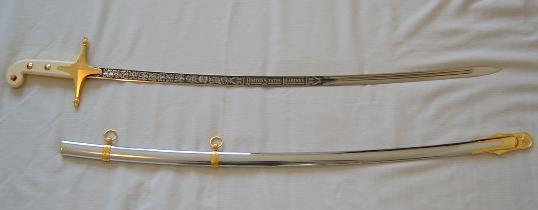
The crazy thing is, the Marine Corps has included swords in their dress uniforms since at least the 1820s, but there is absolutely no training offered for them. No combative training, anyway. You are taught to draw the weapon, to salute with it, to make crisp motions on the drill field, and to re-sheath it. At no point does any Marine get any training on how to straight up Highlander off a head with one of these things.
It makes me sad. And I'm not the only one.
So back to training. Why the hell do you NEED to learn how to use one of these things? It's not like you carry one regularly, or are likely to be challenged to a duel.
You need to learn how to use one because it's a goddamn sword and swords are awesome, that's why.
Fencing was taught for centuries as a critical part of a young man's education, a refining step to turn a young lunkhead into a braver, faster, more competent, and more physically fit lunkhead. Teddy Roosevelt fenced. Aldo Nadi (1920 Olympic triple gold medalist in fencing, considered one of the best fencers of all time) commented that America was a perfect match for fencing, as our citizens were naturally athletic and enjoyed physical exertion (he wrote that in 1941. A lot has changed).
Even the Boy Scouts of America had a fencing merit badge (actually, a "Master at Arms" merit badge. It included fencing, archery, quarterstaves, and wrestling.) until about 1911, when a bunch of 1911 soccer moms decided it was a Bad Idea (it wasn't).
So anyhow, it builds character.
And it starts with weapon familiarity. Saber spinning gives you that.
There are a few really good resources out there for getting you started with this kind of work:
1) Spyro Katsigiannis has an excellent video on the basics of stick spinning for power generation.
2) Jim Keating has forgotten more about bladework than most instructors ever learn. Here's him breaking down a flourish from western saber fencing.
3) Your own eyes. I like to use VLC Player to slow down videos to 1/4 speed and analyze their motion on my own. It's an invaluable tool, and something that is inexplicably discouraged in some schools of systema. Use it anyways.
Happy training.
Monday, September 24, 2012
Names and Children
"Lilly, what kind of tree is this?"
My two year old pauses for a second. "A dogwood tree!" She triumphantly yells. "Daddy, do you see the red berries? And the wavy leaves?". At this age, she delights in repeating back exactly what she has learned. Last walk, she learned that trees that have berries and wavy leaves are called dogwoods. She'll repeat the "red berries and wavy leaves" mantra back to me every time she notices one.
She's proud of her knowledge. There are dozens of different tree types in the neighborhood, but dogwoods are one of the most common, and she recognizes every one we pass.
She doesn't know that her knowledge isn't complete. She doesn't know that the dogwood trees won't have leaves in a month, and only rarely have berries. Or that in the spring, they'll look completely different with their explosion of white and pink blossoms.
She doesn't realize that having a name is only a starting point. Nobel physicist Richard Feynman talked about an episode in his childhood when a friend pointed out a bird in their neighborhood. "Do you see that bird? It's called a thrush!" the child gloated, reveling in knowing more than his friend. Feynman's father wisely pointed out that the other boy still didn't know a single real thing about the bird. Didn't know what it ate. How it acted. Where it lived. How long it lived. What it sounded like. What it tasted like. The only thing he knew was the name that English speaking folks called it, which was barely different than not knowing anything at all.
Russian combatives don't use names very often, and this is very confusing for many new practitioners. Sometimes we'll use names to make learning easier (I borrow the numbering system of the Doce Pares school of Filipino martial arts because saying "number 1" is quicker than saying "forehand downward angle strike").
At my first Systema school, most of the students (and the instructor) shared an Aikido background, so different wrist grabs and locks were given Japanese names. Kotagaeshi (literally "forearm return") is a Japanese name for a technique. The Russians don't call it that - they just bend your forearm to the outside of your shoulder in a painful manner. It doesn't matter which of their own limbs they use to put you in this uncomfortable position; 2 hands is easy, but I enjoy using my elbow locked in theirs and my shoulder on their wrist (if they're holding a knife, the knife usually goes into them at this point). If I'm at a different angle, I can use my armpit to block their wrist and my palm under their elbow. Some styles call it a swimmer's lock. If we're on the ground and I put you in the same position, wrestlers call it a V-arm lock. But it's really nothing different. You're still hurting and immobilized just the same, which is the most important thing. The rest are just details. 4 different techniques (and there are many, many more) to show the same principle: "if your arm bends this way, life sucks for you." 4 different names for the same thing.
And yet the names are still important. The names provide a placeholder, a reference point, something to go back to when their opponent seems like an unyielding mass of limbs. There's a quote attributed to Bruce Lee that goes:
But the names are where we start. My daughter and I will continue our walks, adding names to the rapidly growing list of things that she sees and "knows". And we'll build from there. Learn what plants you can eat. Which can make you sick. Which are good for you. Which are good for building a fire. Which has smells that give you a headache when you make fire with them.
It's amazing to learn it all again through her eyes.
My two year old pauses for a second. "A dogwood tree!" She triumphantly yells. "Daddy, do you see the red berries? And the wavy leaves?". At this age, she delights in repeating back exactly what she has learned. Last walk, she learned that trees that have berries and wavy leaves are called dogwoods. She'll repeat the "red berries and wavy leaves" mantra back to me every time she notices one.
She's proud of her knowledge. There are dozens of different tree types in the neighborhood, but dogwoods are one of the most common, and she recognizes every one we pass.
She doesn't know that her knowledge isn't complete. She doesn't know that the dogwood trees won't have leaves in a month, and only rarely have berries. Or that in the spring, they'll look completely different with their explosion of white and pink blossoms.
She doesn't realize that having a name is only a starting point. Nobel physicist Richard Feynman talked about an episode in his childhood when a friend pointed out a bird in their neighborhood. "Do you see that bird? It's called a thrush!" the child gloated, reveling in knowing more than his friend. Feynman's father wisely pointed out that the other boy still didn't know a single real thing about the bird. Didn't know what it ate. How it acted. Where it lived. How long it lived. What it sounded like. What it tasted like. The only thing he knew was the name that English speaking folks called it, which was barely different than not knowing anything at all.
Russian combatives don't use names very often, and this is very confusing for many new practitioners. Sometimes we'll use names to make learning easier (I borrow the numbering system of the Doce Pares school of Filipino martial arts because saying "number 1" is quicker than saying "forehand downward angle strike").
At my first Systema school, most of the students (and the instructor) shared an Aikido background, so different wrist grabs and locks were given Japanese names. Kotagaeshi (literally "forearm return") is a Japanese name for a technique. The Russians don't call it that - they just bend your forearm to the outside of your shoulder in a painful manner. It doesn't matter which of their own limbs they use to put you in this uncomfortable position; 2 hands is easy, but I enjoy using my elbow locked in theirs and my shoulder on their wrist (if they're holding a knife, the knife usually goes into them at this point). If I'm at a different angle, I can use my armpit to block their wrist and my palm under their elbow. Some styles call it a swimmer's lock. If we're on the ground and I put you in the same position, wrestlers call it a V-arm lock. But it's really nothing different. You're still hurting and immobilized just the same, which is the most important thing. The rest are just details. 4 different techniques (and there are many, many more) to show the same principle: "if your arm bends this way, life sucks for you." 4 different names for the same thing.
And yet the names are still important. The names provide a placeholder, a reference point, something to go back to when their opponent seems like an unyielding mass of limbs. There's a quote attributed to Bruce Lee that goes:
"Before I learned martial arts, a punch was just a punch and a kick was just a kick. When I studied martial arts, a punch was no longer just a punch and a kick was no longer just a kick. Now I understand martial arts, and a punch is just a punch and a kick is just a kick."This applies to names. Techniques are names for one way to apply a specific principle. When you understand the principle, then you're free to forget the technique.
But the names are where we start. My daughter and I will continue our walks, adding names to the rapidly growing list of things that she sees and "knows". And we'll build from there. Learn what plants you can eat. Which can make you sick. Which are good for you. Which are good for building a fire. Which has smells that give you a headache when you make fire with them.
It's amazing to learn it all again through her eyes.
Monday, September 10, 2012
Knuckles and Yuckmouth and Sepsis Oh My!
This week Renzo Gracie distinguished himself from the ten million other "R. Gracie"s by posting a bizarre series of tweets that seem to give a play by play of him beating up two muggers.
I'm not going to comment on the possibility that this was staged. Or the wisdom in posting videos of you preemptively thrashing two complete strangers. Perhaps the notoriety you get from such encounters outweighs the legal repercussions when you come from a world-famous fighting clan, but probably not for Joe Average.
What I WILL comment on is that he banged up his knuckles pretty well in the altercation. From his own tweets:

Sharing bodily fluids with a total stranger isn't the best idea, whether it's from casual sex, sharing needles, or from picking pieces of their dentition out of your hand. If you need a more visual example of why you should really avoid the saliva of random people on the street, please click here. But not if you've recently eaten.
(The link shows very graphic pictures of infection that set in several days after a "fight bite". Viewer discretion is advised. )
So a couple of lessons to take away here:
Train smart, people.
I'm not going to comment on the possibility that this was staged. Or the wisdom in posting videos of you preemptively thrashing two complete strangers. Perhaps the notoriety you get from such encounters outweighs the legal repercussions when you come from a world-famous fighting clan, but probably not for Joe Average.
What I WILL comment on is that he banged up his knuckles pretty well in the altercation. From his own tweets:

Sharing bodily fluids with a total stranger isn't the best idea, whether it's from casual sex, sharing needles, or from picking pieces of their dentition out of your hand. If you need a more visual example of why you should really avoid the saliva of random people on the street, please click here. But not if you've recently eaten.
(The link shows very graphic pictures of infection that set in several days after a "fight bite". Viewer discretion is advised. )
So a couple of lessons to take away here:
- Don't punch strangers in the head. Your hand is made of small bones, and their head is made up of large (and in places, pointy) bones. Bad things will come of it. Open hand techniques like slaps and palm strikes lessen the chance of you getting hurt. If you don't believe me, try punching the sidewalk compared to slapping the sidewalk. I promise to sign your cast.
- If you do get cut, see a doctor sooner rather than later. I loathe doctors and I still stand by this statement. Modern medicine can do some pretty impressive things what with their broad-spectrum antibiotics and preventative treatments and black voodoo and whatnot.
- Don't film yourself assaulting people, unless you have a million-dollar or more PR team. Even if this played out the way Renzo says it did and the 2 guys were horrible Nazi dickheads who set orphanages on fire on Christmas morning, they are going to hire lawyers and have a field day with this. Chasing down unarmed people who are running away from you is hard to sell as "self-defense".
Train smart, people.
Awareness drill - Where there's smoke...
Last week, the $3 awareness drill proved itself very useful. I was in a building where a small electronic device had started heating up and smoking, threatening to catch fire. Of the 4 people to see the tiny conflagration, I was the only person who knew where the nearest fire extinguisher was. I had done the $3 drill several times over the preceding month in that building, and it turns out that behind fire extinguishers are a place no one ever checks for hiding dollar bills. :)
After the mess was cleaned up, I showed the other guys where the fire extinguisher was. It was in a little alcove in one of the main hallways. One guy later told me that he had walked by that thing 4 times a day for 7 years and never once noticed that it was there.

Today's awareness drill is simple. Where is the nearest fire extinguisher to you right now? Can you give specific instructions to a person on how to find it?
Follow on for extra credit: Where is the nearest fire alarm switch? (I did not know this one until after the fire, BTW).
After the mess was cleaned up, I showed the other guys where the fire extinguisher was. It was in a little alcove in one of the main hallways. One guy later told me that he had walked by that thing 4 times a day for 7 years and never once noticed that it was there.
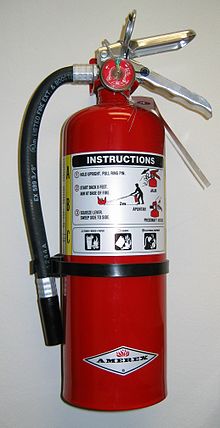
Today's awareness drill is simple. Where is the nearest fire extinguisher to you right now? Can you give specific instructions to a person on how to find it?
Follow on for extra credit: Where is the nearest fire alarm switch? (I did not know this one until after the fire, BTW).
Sunday, September 2, 2012
Screwing Over Future-You
I haven't very much willpower.
Luckily, I've learned to fake it by combing two other character traits:
Back in early 1994, a skinny 18 year old Louie was weighing the decision to enlist in the United States Marine Corps. Perhaps other 18 year olds are more profound or deliberate in their decision making; I made the decision in about 30 seconds. I wish I could say that I had a compelling reason to sign that contract - "Service to my great nation" would sound great, or maybe "family tradition" (3 of my 4 grandparents served in WWII. My grandmother was a Marine, and yes, she kicks tremendous amounts of ass). Even "chicks just melt when they see dress blues" would have been understandable.
But none of those entered my head. I signed my name simply because I wanted to test myself. I wanted a no-bullshit measure of where I stood on the badass-o-meter, a test where no one would bend a single inch to help me pass, and where no one would have the slightest reservation in letting me know if I fail. The Marine Corps is good that way. They have a vested interest in keeping the lazy, the weak, and the incompetent from crossing that finish line.
Like most young men making that transition to adulthood, I was leaving a childhood littered with half-finished endeavors, all started with the sincerest intents - sometimes even short lived obsession - but ultimately left incomplete.
I couldn't let that happen again.
Before I could reconsider, I went straight to the recruiting station and signed my life away. The second I got back home, I told each and every person I knew that I was going to Paris Island. I shouted it from the mountaintops to every friend I had, every person I had an ounce of respect for, every acquaintance. I even told the people I couldn't stand, the ones who would be smiling if I failed.
Especially the ones who would be smiling if I failed.
You see, my fear of seeing those people in 3 months and having to announce my failure was way bigger than my fear of the Marine Corps. So every time during those next 12 weeks that I was face down in mud, trembling like jell-O, trying to squeeze out one more pushup with no end in sight, I thought of what it would mean to quit. To walk that gamut of shame. To tell the people who didn't believe in me that they were right. And then I reached down and kept going. I reached my physical and emotional breaking point many times, but the commitments I had made kept me moving forward.
I can't tell you how many times I cursed out that younger civilian version of myself that had so glibly signed that paperwork, but you know what? He made the right choice. He signed me up for commitments and burned every bridge that would allow me to back out of them, and it worked. I graduated Paris Island on August 12, 1994. That date has opened a lot of doors for me since.
Today we're going to talk about a method of training awareness that ties in with that concept. It isn't a drill per se, but it is a useful tool in keeping you moving forward in your awareness training.You can combine this with future drills.
What you will need:
Below is an example template you can use with Google Calendar. The important parts for getting these reminders to your phone are in red. As you can see, I have a 12:30 reminder on Tuesdays and Fridays. Since I'm usually eating lunch at 12:30, this awareness drill works well in restaurants - I simply have to describe the people sitting closest to me whenever the alarm goes off. If I was actually aware of my surroundings instead of daydreaming about my McSlopBucket biggie-sized value meal, I pass the test.
 I set this alarm for only 2 days of the week because I've found that for me, doing it every day allows me to get used to it and game the system. I start thinking "OK, I better start looking around and seeing what everyone is wearing, because my phone will be going off in about 10 minutes..." Setting it for only 2 days a week allows me to forget about it until it goes off. It's more difficult, and I believe that is key in making the observant behavior come more naturally. Your mind may work differently; adjust accordingly.
When the alarm does go off, it has its own distinctive ringtone (this is set on the cell phone, not on Google Calendar). I don't even have to look down at my phone; I know from that sound that it's time for an awareness test. One that I've probably forgotten all about. One that I was signed up for by a younger version of myself.
Thanks, younger me. Way to keep me on my toes.
Enjoy!
Luckily, I've learned to fake it by combing two other character traits:
- I have a fairly decent sized ego, and
- I am really really good at screwing over future-me.
Back in early 1994, a skinny 18 year old Louie was weighing the decision to enlist in the United States Marine Corps. Perhaps other 18 year olds are more profound or deliberate in their decision making; I made the decision in about 30 seconds. I wish I could say that I had a compelling reason to sign that contract - "Service to my great nation" would sound great, or maybe "family tradition" (3 of my 4 grandparents served in WWII. My grandmother was a Marine, and yes, she kicks tremendous amounts of ass). Even "chicks just melt when they see dress blues" would have been understandable.
But none of those entered my head. I signed my name simply because I wanted to test myself. I wanted a no-bullshit measure of where I stood on the badass-o-meter, a test where no one would bend a single inch to help me pass, and where no one would have the slightest reservation in letting me know if I fail. The Marine Corps is good that way. They have a vested interest in keeping the lazy, the weak, and the incompetent from crossing that finish line.
Like most young men making that transition to adulthood, I was leaving a childhood littered with half-finished endeavors, all started with the sincerest intents - sometimes even short lived obsession - but ultimately left incomplete.
I couldn't let that happen again.
Before I could reconsider, I went straight to the recruiting station and signed my life away. The second I got back home, I told each and every person I knew that I was going to Paris Island. I shouted it from the mountaintops to every friend I had, every person I had an ounce of respect for, every acquaintance. I even told the people I couldn't stand, the ones who would be smiling if I failed.
Especially the ones who would be smiling if I failed.
You see, my fear of seeing those people in 3 months and having to announce my failure was way bigger than my fear of the Marine Corps. So every time during those next 12 weeks that I was face down in mud, trembling like jell-O, trying to squeeze out one more pushup with no end in sight, I thought of what it would mean to quit. To walk that gamut of shame. To tell the people who didn't believe in me that they were right. And then I reached down and kept going. I reached my physical and emotional breaking point many times, but the commitments I had made kept me moving forward.
I can't tell you how many times I cursed out that younger civilian version of myself that had so glibly signed that paperwork, but you know what? He made the right choice. He signed me up for commitments and burned every bridge that would allow me to back out of them, and it worked. I graduated Paris Island on August 12, 1994. That date has opened a lot of doors for me since.
Today we're going to talk about a method of training awareness that ties in with that concept. It isn't a drill per se, but it is a useful tool in keeping you moving forward in your awareness training.You can combine this with future drills.
What you will need:
- A gmail account
- A cell phone that is on you most days
Below is an example template you can use with Google Calendar. The important parts for getting these reminders to your phone are in red. As you can see, I have a 12:30 reminder on Tuesdays and Fridays. Since I'm usually eating lunch at 12:30, this awareness drill works well in restaurants - I simply have to describe the people sitting closest to me whenever the alarm goes off. If I was actually aware of my surroundings instead of daydreaming about my McSlopBucket biggie-sized value meal, I pass the test.

When the alarm does go off, it has its own distinctive ringtone (this is set on the cell phone, not on Google Calendar). I don't even have to look down at my phone; I know from that sound that it's time for an awareness test. One that I've probably forgotten all about. One that I was signed up for by a younger version of myself.
Thanks, younger me. Way to keep me on my toes.
Enjoy!
Thursday, August 23, 2012
Awareness Drill: The $3 drill
This drill will take cost you exactly three dollars. The good news is, if you do a good job, you get all three of those dollars back.
The purpose of this drill is twofold: to increase your awareness of your immediate surroundings, and also to teach you to move in a way that doesn't draw attention to yourself.
This drill is best done in an area that you are often at, but you can try it at locations that are new to you also. It can be indoors or outdoors; the only thing you need to worry about is that IT MUST BE A PLACE THAT IS OFTEN USED BY MANY PEOPLE. Work is a perfect place. So is the street outside work. And the grocery store. And the gas station. Go wild with it.
Anyone who enjoys the hobby of geocaching will be good at this drill. :)
The drill is simple. Take three $1 bills (sorry for being America-centric... of course use a low denomination of paper money if you are in another country). Hide each bill anywhere in a public place where you don't believe they will be found for 3 days. Come back 3 days later and see if the money is still there. Obviously, find 3 different hiding places... don't just stuff all 3 in the same hole. ;)

By looking at the objects around you in a new light - not what they are intended for, but what the ARE, you take in more details about what is around you.
This drill was inspired by a night many years ago in Tombstone, Arizona, where I patiently waited for the better part of an hour for pedestrians to give me a chance to explore underneath the boardwalk bench I was sitting on and find the hidden item that I was sure had to be there.
Return in 3 days and see if you can collect each dollar. This is a nice drill because it provides a nice PASS/FAIL metric for whether you did it correctly or not. :)
Enjoy, and happy training!
The purpose of this drill is twofold: to increase your awareness of your immediate surroundings, and also to teach you to move in a way that doesn't draw attention to yourself.
This drill is best done in an area that you are often at, but you can try it at locations that are new to you also. It can be indoors or outdoors; the only thing you need to worry about is that IT MUST BE A PLACE THAT IS OFTEN USED BY MANY PEOPLE. Work is a perfect place. So is the street outside work. And the grocery store. And the gas station. Go wild with it.
Anyone who enjoys the hobby of geocaching will be good at this drill. :)
The drill is simple. Take three $1 bills (sorry for being America-centric... of course use a low denomination of paper money if you are in another country). Hide each bill anywhere in a public place where you don't believe they will be found for 3 days. Come back 3 days later and see if the money is still there. Obviously, find 3 different hiding places... don't just stuff all 3 in the same hole. ;)

By looking at the objects around you in a new light - not what they are intended for, but what the ARE, you take in more details about what is around you.
This drill was inspired by a night many years ago in Tombstone, Arizona, where I patiently waited for the better part of an hour for pedestrians to give me a chance to explore underneath the boardwalk bench I was sitting on and find the hidden item that I was sure had to be there.
Return in 3 days and see if you can collect each dollar. This is a nice drill because it provides a nice PASS/FAIL metric for whether you did it correctly or not. :)
Enjoy, and happy training!
Friday, August 17, 2012
Awareness Drill - Maps #1
This drill will take about 20 minutes. It doesn't cost anything, and will require only a pen and paper.
From a place that you spend a lot of time in, spend 10 minutes draw a map of your immediate surroundings. If you are at work (where most of us spend much of our days), try to map your floor. If you are outside, try to draw a map a hundred yards square, or a small neighborhood block.

When drawing your map, pay specific attention to safety. If you are indoors, where are the nearest exits? If you are in a restaurant, would it be through the kitchen? Do the restrooms have windows? Are you sitting next to a large plate glass window?
A few scenarios to help you:
1) (for indoors) - A shooter comes in off the street. Where are your exits? If the nearest exit is a window, what is nearby to break it? If you are on a floor higher than ground, is this even a possible route of egress? What would you need to do to leave the building safely in this manner? How long would it take to prepare? How noisy would it be?
2) (For indoors) - A person who is already inside the building suddenly becomes a shooter. Maybe it's a restaurant patron sitting near you, maybe a frustrated coworker. What routes do you have to get away? If you are in a larger building with corridors, what routes give you more options? Visibility?
3) (For indoors) - Where are good places to hide? Are there rooms or areas that are lockable from the inside? The building I am in now has many rooms that are lockable - but each one has a large decorative glass panel next to it that is easily broken and that anyone could walk through with little difficulty. Does that necessarily make it a bad place to hide?
4) (For outdoors) - where is the nearest very public place? If you had to attract a lot of attention, where would you go?
5) For anywhere - What is around you that can stop bullets? Or a determined follower? Where could you quickly lose someone who was chasing you?
Take about 10 minutes to draw your map. When you are finished, take another 10 minutes to walk around the area and see what you've missed. Forgot about a chain-link fence? Were there stairs that you didn't account for? A secure room that you missed? It's enlightening what you can miss about a place you spend 1/3 of your life in each and every day.
From a place that you spend a lot of time in, spend 10 minutes draw a map of your immediate surroundings. If you are at work (where most of us spend much of our days), try to map your floor. If you are outside, try to draw a map a hundred yards square, or a small neighborhood block.

When drawing your map, pay specific attention to safety. If you are indoors, where are the nearest exits? If you are in a restaurant, would it be through the kitchen? Do the restrooms have windows? Are you sitting next to a large plate glass window?
A few scenarios to help you:
1) (for indoors) - A shooter comes in off the street. Where are your exits? If the nearest exit is a window, what is nearby to break it? If you are on a floor higher than ground, is this even a possible route of egress? What would you need to do to leave the building safely in this manner? How long would it take to prepare? How noisy would it be?
2) (For indoors) - A person who is already inside the building suddenly becomes a shooter. Maybe it's a restaurant patron sitting near you, maybe a frustrated coworker. What routes do you have to get away? If you are in a larger building with corridors, what routes give you more options? Visibility?
3) (For indoors) - Where are good places to hide? Are there rooms or areas that are lockable from the inside? The building I am in now has many rooms that are lockable - but each one has a large decorative glass panel next to it that is easily broken and that anyone could walk through with little difficulty. Does that necessarily make it a bad place to hide?
4) (For outdoors) - where is the nearest very public place? If you had to attract a lot of attention, where would you go?
5) For anywhere - What is around you that can stop bullets? Or a determined follower? Where could you quickly lose someone who was chasing you?
Take about 10 minutes to draw your map. When you are finished, take another 10 minutes to walk around the area and see what you've missed. Forgot about a chain-link fence? Were there stairs that you didn't account for? A secure room that you missed? It's enlightening what you can miss about a place you spend 1/3 of your life in each and every day.
Monday, August 13, 2012
Awareness Drill - Sense of Smell
This drill will cost you nothing, or possibly one onion if your refrigerator is not well stocked. It takes 5 minutes to play, but if you find yourself having a good time, it can go much, much longer. It also requires a partner, and is suitable for work with kids.

This drill comes from an interesting source - the 1919 book "Scouting Games", by BSA founder Sir Robert Baden-Powell. Take a look through the book; boys were trained to be straight-up miniature ninjas 100 years ago. (There was even a "Master At Arms" merit badge, retired in 1911, which was earned through fencing, quarterstaves, archery, boxing, and wrestling. Few den mothers would allow this today, I'm afraid...)
I'll tell you right now: all things being equal, women are better at this game than men. People who spend tremendous time outdoors are better at it than their office-dwelling counterparts. I spent 4 weeks living like a caveman in a desert; 2 weeks after getting back to civilization, I was able to find a grove of Paw-Paw trees from 20 yards away based on smell alone - I could smell the fruit rotting on the ground. Your sense of smell can be sharpened, and will likewise atrophy without use. Start sniffing things now.
The most straight-forward version of this drill is to have your partner take an onion or similar pungent object, and rub it on various objects in your yard (out of your view, of course). Make it easy on yourself and do it at nose-height for the first few attempts. Then see if you can discover where that onion has been rubbed. The BSA manual recommends that the finder be blindfolded; I think that is because rubbing an onion on things leaves a wet mark and sometimes other visual clues like flakes of peel - but I don't think you need to start off blindfolded. For most people, the drill is challenging enough with your eyes open.
Permutations on this involve closing your eyes and having your partner bring various objects up to your nose. See if you can identify what they are made from. Aluminum has a sharp smell to it. Wax, not so much. Raid your kitchen on this one. Tomato plants have a similar smell to cut tomatoes, especially when the stem is crushed. Not so much in the leaves. What does your shirt smell like? Your wife's shirt?
In his excellent blog, Rory Miller talks about the sense of smell often. Nobel Laureate and physics genius Richard Feynman used to impress (disturb?) people at parties by having a guest pick a book from his shelf at random and open to a page while Feyman was out of the room. He would then smell the guest's hand and find what book they had touched, often finding the exact correct page.
Start working on this under-utilized sense now. Experiment. Discover. Play. Your environment is flooded with smells - see how much information is out there, free for the taking, that you never noticed before.

This drill comes from an interesting source - the 1919 book "Scouting Games", by BSA founder Sir Robert Baden-Powell. Take a look through the book; boys were trained to be straight-up miniature ninjas 100 years ago. (There was even a "Master At Arms" merit badge, retired in 1911, which was earned through fencing, quarterstaves, archery, boxing, and wrestling. Few den mothers would allow this today, I'm afraid...)
I'll tell you right now: all things being equal, women are better at this game than men. People who spend tremendous time outdoors are better at it than their office-dwelling counterparts. I spent 4 weeks living like a caveman in a desert; 2 weeks after getting back to civilization, I was able to find a grove of Paw-Paw trees from 20 yards away based on smell alone - I could smell the fruit rotting on the ground. Your sense of smell can be sharpened, and will likewise atrophy without use. Start sniffing things now.
The most straight-forward version of this drill is to have your partner take an onion or similar pungent object, and rub it on various objects in your yard (out of your view, of course). Make it easy on yourself and do it at nose-height for the first few attempts. Then see if you can discover where that onion has been rubbed. The BSA manual recommends that the finder be blindfolded; I think that is because rubbing an onion on things leaves a wet mark and sometimes other visual clues like flakes of peel - but I don't think you need to start off blindfolded. For most people, the drill is challenging enough with your eyes open.
Permutations on this involve closing your eyes and having your partner bring various objects up to your nose. See if you can identify what they are made from. Aluminum has a sharp smell to it. Wax, not so much. Raid your kitchen on this one. Tomato plants have a similar smell to cut tomatoes, especially when the stem is crushed. Not so much in the leaves. What does your shirt smell like? Your wife's shirt?
In his excellent blog, Rory Miller talks about the sense of smell often. Nobel Laureate and physics genius Richard Feynman used to impress (disturb?) people at parties by having a guest pick a book from his shelf at random and open to a page while Feyman was out of the room. He would then smell the guest's hand and find what book they had touched, often finding the exact correct page.
Start working on this under-utilized sense now. Experiment. Discover. Play. Your environment is flooded with smells - see how much information is out there, free for the taking, that you never noticed before.
Saturday, August 11, 2012
Awareness Drill - Whose Ride Is It Anyway?
This fascinating awareness drill was given to me by an alumni of Tom Brown's Tracker school in New Jersey.
This drill will cost you one cup of coffee and take about 30 minutes.
The idea is simple: find a brick and mortar store (a Starbucks at off-peak hours is perfect), and walk slowly through the parking lot. Ideally, there shouldn't be more than 10 or so cars, and all the cars should have owners inside the Starbucks (so in areas like strip malls where parking spots aren't well defined, this can be more challenging, but still fun).
As you walk past the cars, try to learn what you can about their owners. DO NOT be obvious about this -- you'll look like a hood looking for a car to break into! Sometimes learning about the car's owner is easy (who hasn't seen those stick figure family stickers on the backs of minivans?) A tricked-out Honda Civic with spinners probably doesn't belong to the senior citizen with the military crew-cut. He probably has the ride with the blue Department of Defense sticker at the top. The $60k luxury sedan probably doesn't go with the pimple-faced teenager working the cash register.
Usually. Sometimes you get surprises.
Go inside and get your favorite FourBuxx latte, then grab a seat near a window where you can observe the parking lot. See if your guesses were correct as the patrons eventually return to their cars. Remember that some of the cars (usually the ones with the best parking spots) will belong to the barristas (don't forget to tip!). Sometimes you can even strike up a conversation with one and see if you can non-chalantly learn if a car is theirs, but this works best if the car has some kind of highly-personalized feature (such as bumper stickers or expensive after market mods).
If you want to get better at this drill in a hurry, spend 10 minutes watching a drive-thru line. First observe the vehicle, then try to paint a mental picture of what kind of person would drive that, then look in the driver's seat.
An excellent video that shows how much information can be read from vehicles (and many other sources) is below. It's worth the watch.
Let me know what you discover!
This drill will cost you one cup of coffee and take about 30 minutes.
The idea is simple: find a brick and mortar store (a Starbucks at off-peak hours is perfect), and walk slowly through the parking lot. Ideally, there shouldn't be more than 10 or so cars, and all the cars should have owners inside the Starbucks (so in areas like strip malls where parking spots aren't well defined, this can be more challenging, but still fun).
As you walk past the cars, try to learn what you can about their owners. DO NOT be obvious about this -- you'll look like a hood looking for a car to break into! Sometimes learning about the car's owner is easy (who hasn't seen those stick figure family stickers on the backs of minivans?) A tricked-out Honda Civic with spinners probably doesn't belong to the senior citizen with the military crew-cut. He probably has the ride with the blue Department of Defense sticker at the top. The $60k luxury sedan probably doesn't go with the pimple-faced teenager working the cash register.
Usually. Sometimes you get surprises.
Go inside and get your favorite FourBuxx latte, then grab a seat near a window where you can observe the parking lot. See if your guesses were correct as the patrons eventually return to their cars. Remember that some of the cars (usually the ones with the best parking spots) will belong to the barristas (don't forget to tip!). Sometimes you can even strike up a conversation with one and see if you can non-chalantly learn if a car is theirs, but this works best if the car has some kind of highly-personalized feature (such as bumper stickers or expensive after market mods).
If you want to get better at this drill in a hurry, spend 10 minutes watching a drive-thru line. First observe the vehicle, then try to paint a mental picture of what kind of person would drive that, then look in the driver's seat.
An excellent video that shows how much information can be read from vehicles (and many other sources) is below. It's worth the watch.
Let me know what you discover!
Awareness
We train hard at Virginia Systema. A typical workout will involve 20-30 minutes of body conditioning (exercises to get stronger, move more fluidly, or ideally both) followed by an hour or more of combative drills. Our drills cover a really broad range; common topics include striking, lock flow, grappling, ground mobility, knife work, and stick work (single and double). Anyone who wants to stay later and spar or play with what they've learned is welcome. It's a combination of laboratory and playground to experiment with new techniques and concepts.
But techniques and concepts are physical things. And physical training just isn't enough.
In every single martial arts school, seminar, and training event I have attended (which is a lot, going back to 1989) emphasis has been placed on awareness of surroundings. Every single teacher agrees that situational awareness is very important, but almost none of these places has done a good job of explaining how one BUILDS this critical skill.
I've pieced together a large number of drills to accomplish exactly that. I've picked the brains of instructors with 4 decades or more of experience, friends with military/SF backgrounds, public and private forums, and every other relevant source I can think of. When class is in session, the training time that we have is valuable, and should be used to build skills that can only be built with a willing and respectful partner in front of us. But for all the times that class is NOT in session, we can be working to build awareness of the world around us.
Awareness makes us less easy prey. It gives us advanced warning of Bad Things that are about to happen in our immediate area, and gives us extra seconds to respond. It connects us to the world around us and makes us active agents instead of just passive observers.
I have started a Twitter feed where I'll be giving 2 new drills every week that anyone can practice to build greater awareness of their surroundings. Each drill will be thoroughly explained, and any materials needed will be cheap or free whenever possible. The majority of the drills won't require anyone else, because you don't always have the luxury of a good training partner. Drills are spaced out with 3-4 days in between so you can practice them over and over again and share any insights you gain in the process.
Check us out and let us know what you think!
But techniques and concepts are physical things. And physical training just isn't enough.
In every single martial arts school, seminar, and training event I have attended (which is a lot, going back to 1989) emphasis has been placed on awareness of surroundings. Every single teacher agrees that situational awareness is very important, but almost none of these places has done a good job of explaining how one BUILDS this critical skill.
I've pieced together a large number of drills to accomplish exactly that. I've picked the brains of instructors with 4 decades or more of experience, friends with military/SF backgrounds, public and private forums, and every other relevant source I can think of. When class is in session, the training time that we have is valuable, and should be used to build skills that can only be built with a willing and respectful partner in front of us. But for all the times that class is NOT in session, we can be working to build awareness of the world around us.
Awareness makes us less easy prey. It gives us advanced warning of Bad Things that are about to happen in our immediate area, and gives us extra seconds to respond. It connects us to the world around us and makes us active agents instead of just passive observers.
I have started a Twitter feed where I'll be giving 2 new drills every week that anyone can practice to build greater awareness of their surroundings. Each drill will be thoroughly explained, and any materials needed will be cheap or free whenever possible. The majority of the drills won't require anyone else, because you don't always have the luxury of a good training partner. Drills are spaced out with 3-4 days in between so you can practice them over and over again and share any insights you gain in the process.
Check us out and let us know what you think!
Thursday, July 26, 2012
The Law of 3
I learned the law of 3
in the middle of the desert in Utah. I had been in the desert for 14
days when my teachers called the students into a circle. We had been
constantly hungry, thirsty, cold, hot, rained upon, sick, and 2 had
twisted their ankle. We were also 100 miles from paved roads, so their
words carried more weight.
Your body has many needs, but some have higher priority than others. When the shit hits the fan and an all-out crisis happens, it is important to know what the priorities are. The Law of 3 helps you to remember them.
Calmness is the first priority. No how bad an accident is - whether it's losing your backpack down a cliff, breaking your leg, feeling an earthquake, or even something as mundane as a computer problem - it will get MUCH WORSE in the first 3 seconds if you allow panic to take a hold of you. You'll slide down that unstable ledge after your pack; you'll stand up and turn that hairline fracture into a compound fracture; you'll freeze where you stand instead of seeking safer cover; you'll hit the power button without saving your data - and POOF. The situation just got much worse. Awareness of your state and control of your breathing are the two biggest factors in controlling this panic.
August 23, 2011 was an eye-opening example - the east coast of the United States (where I live) experienced a 5.9 earthquake. As soon as I realized the slight rumbling was not a nearby truck, I got up, quickly walked away from the large glass windows to my back and into a doorframe. I called out to my coworkers loudly and calmly to GET IN A DOORWAY. Yet by the time the quake ended, only 1 person (out of roughly 20 within earshot) had even started to approach any doorway. The rest were frozen, asking "Is this an Earthquake?". While they would not identify that as panic, that is exactly what that freezing in place is. They also were not able to hear my clear instructions - this is called "auditory exclusion", and is a common trait of panic. Trauma survivors frequently report auditory exclusion when recounting the ordeal.
Air is the second priority. You can go roughly 3 minutes without taking in air before serious and permanent damage or death takes place. If your (or someone you love's) airway is blocked, whether its from swelling from an allergic reaction, choking on food, or being trapped in an airtight space once the air has run out, you have 3 minutes to remedy the problem. Whatever the answer is - Epinepherine, Heimlich maneuver, tracheotomy, etc - you have 3 minutes to fix whatever has gone wrong. The time goes down if there is panic, as you will be expending much more air than is necessary. (blood chokes, which occur in martial arts where the carotid artery is blocked via external pressure, preventing oxygen from reaching the brain, are a special case. These cause unconsciousness in much less than 3 minutes - in seconds if the choke is well-executed. But for the Law of 3, we're dealing with situations where vascular blood flow is not restricted.)
Shelter is the third priority. If you are cold or wet to the point of hypothermia, you will succumb to exposure in about 3 hours unless you are able to find a place to dry out. Having a change of clothing, knowing how to make a weatherproof shelter - even fabricating cover out of garbage bags (I have done this) is something you need to recognize and know how to do if help is more than 3 hours away. I have a friend who almost died (she lost 4 toes instead) when a 3 mile snow hike went very badly wrong and lasted 12 hours. Obviously, this is less of a problem if it is 72 degrees and dry, but the point is to prepare for all situations - not just best case scenarios.
Water is the fourth priority. The human body can generally go 3 days without water. Environmental factors such as temperature and humidity, as well as exertion of the individual, can make this number go down. Knowing how to locate, store, sterilize, or filter water is vital. Knowing how to treat diarrhea is just as important. (Did you know that you can make a tea out of pine needles that will help with that? It's not as good as Immodium, and it tastes like shit, but it was helped me out before)
Food is the fifth priority, and is way further down the list than most people think. Your body can go about 3 weeks without food before lasting and irreversible damage to organs and tissues takes place. I have personally gone 5 days with zero food, hiking 10-15 miles per day with severe elevation changes, with no ill effects (other than I was grumpy and had a headache for the first 2 days). The rule of thumb is that if you are surviving long enough to get hungry, you're doing alright.
Companionship is the sixth and last priority. If you go longer than 3 months without human contact, it can be psychologically harmful. The instructors who took me into the desert to learn how to survive like an Anasazi Indian from 1500 years ago are a unique and interesting bunch. Many of them live year-round in tents (yurts) that they have made themselves. Several of them have not had indoor plumbing or a traditional roof over their heads in years. But it is a close-knit community, and even when one of them is soujourning many miles away from civilization for weeks at a time, their friends will make sure to do sanity visits and check in on them every few weeks. People need other people. It's what keeps us from having conversations with bloody handprints on Wilson volleyballs.
Your body has many needs, but some have higher priority than others. When the shit hits the fan and an all-out crisis happens, it is important to know what the priorities are. The Law of 3 helps you to remember them.
Calmness is the first priority. No how bad an accident is - whether it's losing your backpack down a cliff, breaking your leg, feeling an earthquake, or even something as mundane as a computer problem - it will get MUCH WORSE in the first 3 seconds if you allow panic to take a hold of you. You'll slide down that unstable ledge after your pack; you'll stand up and turn that hairline fracture into a compound fracture; you'll freeze where you stand instead of seeking safer cover; you'll hit the power button without saving your data - and POOF. The situation just got much worse. Awareness of your state and control of your breathing are the two biggest factors in controlling this panic.
August 23, 2011 was an eye-opening example - the east coast of the United States (where I live) experienced a 5.9 earthquake. As soon as I realized the slight rumbling was not a nearby truck, I got up, quickly walked away from the large glass windows to my back and into a doorframe. I called out to my coworkers loudly and calmly to GET IN A DOORWAY. Yet by the time the quake ended, only 1 person (out of roughly 20 within earshot) had even started to approach any doorway. The rest were frozen, asking "Is this an Earthquake?". While they would not identify that as panic, that is exactly what that freezing in place is. They also were not able to hear my clear instructions - this is called "auditory exclusion", and is a common trait of panic. Trauma survivors frequently report auditory exclusion when recounting the ordeal.
Air is the second priority. You can go roughly 3 minutes without taking in air before serious and permanent damage or death takes place. If your (or someone you love's) airway is blocked, whether its from swelling from an allergic reaction, choking on food, or being trapped in an airtight space once the air has run out, you have 3 minutes to remedy the problem. Whatever the answer is - Epinepherine, Heimlich maneuver, tracheotomy, etc - you have 3 minutes to fix whatever has gone wrong. The time goes down if there is panic, as you will be expending much more air than is necessary. (blood chokes, which occur in martial arts where the carotid artery is blocked via external pressure, preventing oxygen from reaching the brain, are a special case. These cause unconsciousness in much less than 3 minutes - in seconds if the choke is well-executed. But for the Law of 3, we're dealing with situations where vascular blood flow is not restricted.)
Shelter is the third priority. If you are cold or wet to the point of hypothermia, you will succumb to exposure in about 3 hours unless you are able to find a place to dry out. Having a change of clothing, knowing how to make a weatherproof shelter - even fabricating cover out of garbage bags (I have done this) is something you need to recognize and know how to do if help is more than 3 hours away. I have a friend who almost died (she lost 4 toes instead) when a 3 mile snow hike went very badly wrong and lasted 12 hours. Obviously, this is less of a problem if it is 72 degrees and dry, but the point is to prepare for all situations - not just best case scenarios.
Water is the fourth priority. The human body can generally go 3 days without water. Environmental factors such as temperature and humidity, as well as exertion of the individual, can make this number go down. Knowing how to locate, store, sterilize, or filter water is vital. Knowing how to treat diarrhea is just as important. (Did you know that you can make a tea out of pine needles that will help with that? It's not as good as Immodium, and it tastes like shit, but it was helped me out before)
Food is the fifth priority, and is way further down the list than most people think. Your body can go about 3 weeks without food before lasting and irreversible damage to organs and tissues takes place. I have personally gone 5 days with zero food, hiking 10-15 miles per day with severe elevation changes, with no ill effects (other than I was grumpy and had a headache for the first 2 days). The rule of thumb is that if you are surviving long enough to get hungry, you're doing alright.
Companionship is the sixth and last priority. If you go longer than 3 months without human contact, it can be psychologically harmful. The instructors who took me into the desert to learn how to survive like an Anasazi Indian from 1500 years ago are a unique and interesting bunch. Many of them live year-round in tents (yurts) that they have made themselves. Several of them have not had indoor plumbing or a traditional roof over their heads in years. But it is a close-knit community, and even when one of them is soujourning many miles away from civilization for weeks at a time, their friends will make sure to do sanity visits and check in on them every few weeks. People need other people. It's what keeps us from having conversations with bloody handprints on Wilson volleyballs.
Monday, June 18, 2012
Last night was a beautiful night, and on all beautiful nights, Virginia Systema trains outdoors. There's a nice lush strip of grass perfect for a small group to roll around a punch each other on, and that's exactly what we did for an hour and a half. After checking the area for any sharp rocks or debris, we started rolling. Just walking at a slow and leisurely pace, tucking into a forward roll, and returning to standing and walking. The rolls happened whenever the students wanted them at first. No pressure.
The students there had each done hundreds of rolls before on mats. The lush grass and soft earth was almost as soft as a mat, and once their bodies realized that, the rolls came easier. Those first few rolls where the ground was an unknown were hesitant, but quickly smoothed out. The ground was bumpy and uneven, which added an interesting dynamic, but it was nothing people couldn't overcome.
But then I changed the rules. You couldn't roll whenever you liked anymore. You had to do it only when I clapped.
Fear. Tension. Stutter steps to get to that favorite leg (I was guilty of this one a few times when I had one of the students clap). Held breath. All just from losing the control over when the roll happened.
I continued to change rules. Now you had to walk backwards and roll. This caused a different, new tension, since now you couldn't see what was in your path. (ah, but you COULD once you realized you could watch the shadows of the setting sun... then you could at least be sure you weren't about to collide with another person. There are all kinds of clues about your surroundings you can find, but you'll have to try these drills on your own to discover them). Things got REALLY interesting once I took the group away from the soft grass and onto asphalt. Suddenly no one could roll anymore! Everyone had visions of their heads being dashed in by the hard, unyielding pavement and froze with both hands on the ground and their butts in the air. Norman Rockwell would have totally ran and grabbed his easel.
I circled my guys up and we talked about what had just happened. The point I made was that when you train, there is always a lie. Maybe lie is too strong of a word? It's a deviation from what would actually happen in reality. A technique - in this case, a forward roll - isn't the same when practiced in isolation as it is in the real world. We roll so that if we are tripped or knocked down, we can get up quickly without damaging ourselves. But in order for this to happen, we have to be able to do it from either leg. Without warning. Without maybe even knowing that a roll is coming up until our balance is already taken. That perfect, tactical, lifesaving roll is practiced slowly, in calm and sterile environments, and that is a lie. Or maybe it's a white lie - that slow, sterile roll is perfectly valid, but it is the practitioner's belief that he "has it down" that is the lie. "Aikido works fine; your Aikido doesn't."
It's a lie that people have to know and be able to spot on their own, so that they can adjust their training so that there's less of a lie. You'll never completely remove the lie - a sane and reasonable person will never train rolls by having people jump out of alley ways and slug them in the jaw so that they trip over a concrete curb - but it's important to know where your technique fails. And then to fix it.
Sunday, July 24, 2011
Fighting Back
On 22 July 2011, a gunman in Utøya, Norway disguised himself as a police officer, called together members of a youth summer camp, and began shooting at them. The latest figure is 86 dead, 20 injured. The gunman's shooting spree lasted for over an hour, in which time he was able to reload multiple times and hunt down his victims. Most of the survivors escaped by hiding or pretending to be dead.
Compare this to another horrifying attack that happened recently. On 8 January 2011, at a political assembly in Tucson, Arizona (United States), a gunman opened fire specifically at Congresswoman Gabrielle Giffords and her entourage, then indiscriminately into the crowd. 6 killed, 14 injured.
The Tucson gunman had 33-round clips on his person, and the deathcount could have been much higher. instead, he was stopped by a 61 year old houswife, a 74 year old retired vet, and a 2 other civilians, all unarmed. They hit him with chairs, they wrestled him to the ground, they interfered with his hands as he tried to reload. They saved lives - their own, and countless others around them.
Arizona is a very gun-friendly state. Anyone over the age of 21 without a felony can carry a concealed handgun without a permit. But the only person who was carrying a weapon who had anything to do with resisting and subduing the gunman didn't even draw his weapon - he (wisely) kept it holstered since by the time he arrived on the scene, the gunman was already on his face and largely under control. It's laudable that this citizen was prepared, but in this case it wasn't necessary. The aggressive instinct of the 3 heroes was what saved the day.
Airline industry shows the same trend: the increase in x-ray machines, ID checks, TSA employees, and other measures are not what is saving lives. The only things that have saved lives on airplanes since 9-11 has been arming cockpit doors and teaching passengers to fight back.
At the end of the day, it's far more important to fight back with what you have, immediately. When I was in the kidnapping captial of the world (Bogota Colombia) in 1999 working against drug traffickers, the advice was the same: "Fight back. No matter what - even if they have a gun, even if there's a dozen of them. Don't let them put you in a vehicle. The situation never improves at the second crime scene."
Here at Virginia Systema, we train to overcome our natural hesitancy and tendency to freeze. We train with and against weapons, from a conflict's start to its finish. So from the instant when someone draws a weapon from a hidden pocket to the moment you've escaped to a safe zone and are searching yourself for wounds (many people don't realize they've been seriously injured because of the adrenaline dump), it will feel familiar because you've already seen it and practiced it a hundred times.
Continuous motion. Breathing. Forward aggression. Using everything in your aresnal. Pocket change flung at their eyes. Your Starbucks coffee. Your pocket knife. Your hands. Your feet. Your whole body.
It's up to you. When seconds count, the police are minutes away.
Good luck, and safe training!
.
 |
| This murderer's spree lasted over 90 minutes. |
Compare this to another horrifying attack that happened recently. On 8 January 2011, at a political assembly in Tucson, Arizona (United States), a gunman opened fire specifically at Congresswoman Gabrielle Giffords and her entourage, then indiscriminately into the crowd. 6 killed, 14 injured.
 |
| His rampage only lasted 1 minute due to aggressive civilians fighting back. |
The Tucson gunman had 33-round clips on his person, and the deathcount could have been much higher. instead, he was stopped by a 61 year old houswife, a 74 year old retired vet, and a 2 other civilians, all unarmed. They hit him with chairs, they wrestled him to the ground, they interfered with his hands as he tried to reload. They saved lives - their own, and countless others around them.
Arizona is a very gun-friendly state. Anyone over the age of 21 without a felony can carry a concealed handgun without a permit. But the only person who was carrying a weapon who had anything to do with resisting and subduing the gunman didn't even draw his weapon - he (wisely) kept it holstered since by the time he arrived on the scene, the gunman was already on his face and largely under control. It's laudable that this citizen was prepared, but in this case it wasn't necessary. The aggressive instinct of the 3 heroes was what saved the day.
Airline industry shows the same trend: the increase in x-ray machines, ID checks, TSA employees, and other measures are not what is saving lives. The only things that have saved lives on airplanes since 9-11 has been arming cockpit doors and teaching passengers to fight back.
At the end of the day, it's far more important to fight back with what you have, immediately. When I was in the kidnapping captial of the world (Bogota Colombia) in 1999 working against drug traffickers, the advice was the same: "Fight back. No matter what - even if they have a gun, even if there's a dozen of them. Don't let them put you in a vehicle. The situation never improves at the second crime scene."
Here at Virginia Systema, we train to overcome our natural hesitancy and tendency to freeze. We train with and against weapons, from a conflict's start to its finish. So from the instant when someone draws a weapon from a hidden pocket to the moment you've escaped to a safe zone and are searching yourself for wounds (many people don't realize they've been seriously injured because of the adrenaline dump), it will feel familiar because you've already seen it and practiced it a hundred times.
Continuous motion. Breathing. Forward aggression. Using everything in your aresnal. Pocket change flung at their eyes. Your Starbucks coffee. Your pocket knife. Your hands. Your feet. Your whole body.
It's up to you. When seconds count, the police are minutes away.
Good luck, and safe training!
.
Wednesday, April 20, 2011
Side Channels in Fighting
"From one thing, know ten thousand things." -Miyamoto Musashi, 17th century Japanese swordsman
I'd like to start my inaugural post by asking you to look at the following picture and tell me what you see.

It's a simple picture, with simple answers. It's a rabbit. Probably wild. Definitely a boy. It's in some grass. A man or woman named B. Katzung placed a watermark on the picture, apparently in 2005.
But there's more to the picture than just that. Much more. For instance, from this picture alone (not using Google or any other webpage), I can tell you that it was taken with a Canon EOS-1D Mark II camera. I can tell you that the picture was taken June 12, 2005, at 1:22 PM local time. I can tell you that a person named Bert Katzung (so it was a man!) edited the picture several times using Adobe Photoshop CS2 on a Windows machine. I can tell you that the picture was taken in the Marin-Sonoma area of California. In fact, if I wanted to track down the person who took this shot, I'd have a pretty good head start just from this picture alone.
So how do I know these things, just from this one file?
Simple. This picture of a bunny contains hidden information. Tons of it.
The camera that took this photograph saved the picture, and along with it, saved inside the file information about the camera itself. Shutter speed, model type, whether the flash went off, the time taken - all kinds of information (called "metadata"). The photographer's image editing software added more, such as who has registered the software (Bert), what kind of computer he was using (Windows), and where the picture was saved from (a folder called ...\California\Marin-Sonoma).
You can see this information (and much more) by using a simple and free tool called EXIFTOOL (available here ), which will allow you to see hidden information in many different kinds of files (not just pictures).
Bert probably had no idea that the bunny picture had all of that information in it - to him it was just a picture of a rabbit. But if you know what to look for and how to look for it, there's a wealth of information to discover.
So what does this have to do with fighting?
Simple. Your punches, kicks, and the rest of your movements also contain hidden information. Lots of it.
In a real world confrontation, before the first punch is thrown, there is a lead up to it: words are exchanged, distance is crossed by the aggressor to the defender, and body positions are shifted to cut off exits, to protect vital regions, or to give better access to strong sides or weapons. This is true whether the encounter is a fight at a bar or a mugging in a parking lot. One person makes the decision that it is going to get physical, prepares their body for violence, and the other must react.
Knowing how to spot the hidden information in these pre-fight movements - knowing how to see more than just "the rabbit" - is the difference between learning that the Fight Is On while the guy is still 2 steps away from you, or making that same realization after his fist has already connected with your face.
If I'm the defender, there are several pieces of hidden information that I'm looking for which we'll go over in future posts. For now, the most important, is "is this guy about to attack me?"
The best way to learn to find and read these hidden cues is through continuous mindful practice with honest partners. In the Combat Systema classes that I teach, we use drills where one person is the defender and the rest of the class walks around that person like they were a crowd walking past a pedestrian in Times Square. No one pays attention to the defender at all... except for the one person chosen at random to be the attacker. Sometimes the attacker will come at them with fists. Sometimes he'll reach into his pocket or into his waistband and pull out a knife. Sometimes it'll be from the front. Sometimes from behind. The point is to train the defender's eyes to recognize the directed aggressive attention, to see the break in the pattern of people around him, to pick up on the hidden body language clues. Distance, cadence of walk, choppiness of breath, body angle, hand and eye positions - all of these things contain hidden information that you can pick up on to reveal the person's intent.
Reading this hidden information won't stop the fight from happening, but will give you more time to react and prepare.
Response time = reaction time + movement time
The middle of a fight is a bad time to be thinking about mathematics, but here is one equation that governs the reality of combat. Your response time equals your reaction time plus your movement time. If I have any hope of blocking your incoming punch, I have to:
This equation works both ways. As a defender, I want to minimize my reaction time by identifying an attack as early as possible. And as an attacker, I want to not telegraph my attack so that I delay my opponent's reaction time (ie cause him to not realize my attack is happening until it's too late for him to stop it). Michael Jai White brilliantly shows this in the following clip:
By taking away movement cues, White is able to land more punches without speeding his fists up at all. What White says about brake lights at 3:50 is a perfect explanation of what is going on.
You can work on removing this hidden information on your own through slow and mindful work in front of a mirror, but it should also be tested with a partner. When you are by yourself, throw punches slowly while watching your body in a full-length mirror. Are you telegraphing when you punch? When I started doing this seriously, I began to notice that I kept my hands loose, but clenched into a fist right before my punches. This hand movement alone was enough to give an opponent a few hundredths of a second of heads up notice that an attack is incoming.Other common tells are breaking breath (either by holding breath or loudly exhaling), visible shoulder and neck tension, and breaking of rhythmic patterns of hand and arm movement prior to throwing the punch.
Partner drills are simple - have them hold a hitting target still while you warm up striking slowly with a simple jab. Remember, start slowly at first. After a few dozen reps, have the partner call out when they see your attack begin. See if you can get your hand closer to that stationary pad before their voice each time. It is important not to throw fakes at this time; each movement should be thrown genuinely and with awareness. As you gradually speed up, continue trying to get your hand closer to the stationary pad before you hear your partner's voice. Once you get to full speed, you can have them pull their target away or avoid your strike instead of calling out (it is good to have another stationary pad behind this so you aren't damaging your arm when you go full speed). This drill can be done at all distances, from clinching distance (where less power will be generated but the technique will be faster) to full extension.
Remember, training solo is good, but live feedback is best. And there's no better live feedback then sparring against a non-compliant partner. Find an open mat in your area, grab a training partner, and put what you practice to the test!
Good luck, and safe training!
I'd like to start my inaugural post by asking you to look at the following picture and tell me what you see.

It's a simple picture, with simple answers. It's a rabbit. Probably wild. Definitely a boy. It's in some grass. A man or woman named B. Katzung placed a watermark on the picture, apparently in 2005.
But there's more to the picture than just that. Much more. For instance, from this picture alone (not using Google or any other webpage), I can tell you that it was taken with a Canon EOS-1D Mark II camera. I can tell you that the picture was taken June 12, 2005, at 1:22 PM local time. I can tell you that a person named Bert Katzung (so it was a man!) edited the picture several times using Adobe Photoshop CS2 on a Windows machine. I can tell you that the picture was taken in the Marin-Sonoma area of California. In fact, if I wanted to track down the person who took this shot, I'd have a pretty good head start just from this picture alone.
So how do I know these things, just from this one file?
Simple. This picture of a bunny contains hidden information. Tons of it.
The camera that took this photograph saved the picture, and along with it, saved inside the file information about the camera itself. Shutter speed, model type, whether the flash went off, the time taken - all kinds of information (called "metadata"). The photographer's image editing software added more, such as who has registered the software (Bert), what kind of computer he was using (Windows), and where the picture was saved from (a folder called ...\California\Marin-Sonoma).
You can see this information (and much more) by using a simple and free tool called EXIFTOOL (available here ), which will allow you to see hidden information in many different kinds of files (not just pictures).
Bert probably had no idea that the bunny picture had all of that information in it - to him it was just a picture of a rabbit. But if you know what to look for and how to look for it, there's a wealth of information to discover.
So what does this have to do with fighting?
Simple. Your punches, kicks, and the rest of your movements also contain hidden information. Lots of it.
In a real world confrontation, before the first punch is thrown, there is a lead up to it: words are exchanged, distance is crossed by the aggressor to the defender, and body positions are shifted to cut off exits, to protect vital regions, or to give better access to strong sides or weapons. This is true whether the encounter is a fight at a bar or a mugging in a parking lot. One person makes the decision that it is going to get physical, prepares their body for violence, and the other must react.
Knowing how to spot the hidden information in these pre-fight movements - knowing how to see more than just "the rabbit" - is the difference between learning that the Fight Is On while the guy is still 2 steps away from you, or making that same realization after his fist has already connected with your face.
If I'm the defender, there are several pieces of hidden information that I'm looking for which we'll go over in future posts. For now, the most important, is "is this guy about to attack me?"
The best way to learn to find and read these hidden cues is through continuous mindful practice with honest partners. In the Combat Systema classes that I teach, we use drills where one person is the defender and the rest of the class walks around that person like they were a crowd walking past a pedestrian in Times Square. No one pays attention to the defender at all... except for the one person chosen at random to be the attacker. Sometimes the attacker will come at them with fists. Sometimes he'll reach into his pocket or into his waistband and pull out a knife. Sometimes it'll be from the front. Sometimes from behind. The point is to train the defender's eyes to recognize the directed aggressive attention, to see the break in the pattern of people around him, to pick up on the hidden body language clues. Distance, cadence of walk, choppiness of breath, body angle, hand and eye positions - all of these things contain hidden information that you can pick up on to reveal the person's intent.
Reading this hidden information won't stop the fight from happening, but will give you more time to react and prepare.
Response time = reaction time + movement time
The middle of a fight is a bad time to be thinking about mathematics, but here is one equation that governs the reality of combat. Your response time equals your reaction time plus your movement time. If I have any hope of blocking your incoming punch, I have to:
- realize you are punching me (reaction time)
- decide upon a course of action (also reaction time)
- move my arm to deflect your incoming attack (movement time)
This equation works both ways. As a defender, I want to minimize my reaction time by identifying an attack as early as possible. And as an attacker, I want to not telegraph my attack so that I delay my opponent's reaction time (ie cause him to not realize my attack is happening until it's too late for him to stop it). Michael Jai White brilliantly shows this in the following clip:
By taking away movement cues, White is able to land more punches without speeding his fists up at all. What White says about brake lights at 3:50 is a perfect explanation of what is going on.
You can work on removing this hidden information on your own through slow and mindful work in front of a mirror, but it should also be tested with a partner. When you are by yourself, throw punches slowly while watching your body in a full-length mirror. Are you telegraphing when you punch? When I started doing this seriously, I began to notice that I kept my hands loose, but clenched into a fist right before my punches. This hand movement alone was enough to give an opponent a few hundredths of a second of heads up notice that an attack is incoming.Other common tells are breaking breath (either by holding breath or loudly exhaling), visible shoulder and neck tension, and breaking of rhythmic patterns of hand and arm movement prior to throwing the punch.
Partner drills are simple - have them hold a hitting target still while you warm up striking slowly with a simple jab. Remember, start slowly at first. After a few dozen reps, have the partner call out when they see your attack begin. See if you can get your hand closer to that stationary pad before their voice each time. It is important not to throw fakes at this time; each movement should be thrown genuinely and with awareness. As you gradually speed up, continue trying to get your hand closer to the stationary pad before you hear your partner's voice. Once you get to full speed, you can have them pull their target away or avoid your strike instead of calling out (it is good to have another stationary pad behind this so you aren't damaging your arm when you go full speed). This drill can be done at all distances, from clinching distance (where less power will be generated but the technique will be faster) to full extension.
Remember, training solo is good, but live feedback is best. And there's no better live feedback then sparring against a non-compliant partner. Find an open mat in your area, grab a training partner, and put what you practice to the test!
Good luck, and safe training!
Subscribe to:
Posts (Atom)