Monday, September 24, 2012

Names and Children

"Lilly, what kind of tree is this?"

My two year old pauses for a second. "A dogwood tree!" She triumphantly yells. "Daddy, do you see the red berries? And the wavy leaves?". At this age, she delights in repeating back exactly what she has learned. Last walk, she learned that trees that have berries and wavy leaves are called dogwoods. She'll repeat the "red berries and wavy leaves" mantra back to me every time she notices one.

She's proud of her knowledge. There are dozens of different tree types in the neighborhood, but dogwoods are one of the most common, and she recognizes every one we pass.

She doesn't know that her knowledge isn't complete. She doesn't know that the dogwood trees won't have leaves in a month, and only rarely have berries. Or that in the spring, they'll look completely different with their explosion of white and pink blossoms.

She doesn't realize that having a name is only a starting point. Nobel physicist Richard Feynman talked about an episode in his childhood when a friend pointed out a bird in their neighborhood. "Do you see that bird? It's called a thrush!" the child gloated, reveling in knowing more than his friend. Feynman's father wisely pointed out that the other boy still didn't know a single real thing about the bird. Didn't know what it ate. How it acted. Where it lived. How long it lived. What it sounded like. What it tasted like. The only thing he knew was the name that English speaking folks called it, which was barely different than not knowing anything at all.

Russian combatives don't use names very often, and this is very confusing for many new practitioners. Sometimes we'll use names to make learning easier (I borrow the numbering system of the Doce Pares school of Filipino martial arts because saying "number 1" is quicker than saying "forehand downward angle strike").

At my first Systema school, most of the students (and the instructor) shared an Aikido background, so different wrist grabs and locks were given Japanese names. Kotagaeshi (literally "forearm return") is a Japanese name for a technique. The Russians don't call it that - they just bend your forearm to the outside of your shoulder in a painful manner. It doesn't matter which of their own limbs they use to put you in this uncomfortable position; 2 hands is easy, but I enjoy using my elbow locked in theirs and my shoulder on their wrist (if they're holding a knife, the knife usually goes into them at this point). If I'm at a different angle, I can use my armpit to block their wrist and my palm under their elbow. Some styles call it a swimmer's lock. If we're on the ground and I put you in the same position, wrestlers call it a V-arm lock. But it's really nothing different. You're still hurting and immobilized just the same, which is the most important thing. The rest are just details.  4 different techniques (and there are many, many more) to show the same principle: "if your arm bends this way, life sucks for you." 4 different names for the same thing.

And yet the names are still important. The names provide a placeholder, a reference point, something to go back to when their opponent seems like an unyielding mass of limbs. There's a quote attributed to Bruce Lee that goes:

 "Before I learned martial arts, a punch was just a punch and a kick was just a kick. When I studied martial arts, a punch was no longer just a punch and a kick was no longer just a kick. Now I understand martial arts, and a punch is just a punch and a kick is just a kick."
This applies to names. Techniques are names for one way to apply a specific principle. When you understand the principle, then you're free to forget the technique.

But the names are where we start. My daughter and I will continue our walks, adding names to the rapidly growing list of things that she sees and "knows". And we'll build from there. Learn what plants you can eat. Which can make you sick. Which are good for you. Which are good for building a fire. Which has smells that give you a headache when you make fire with them.

It's amazing to learn it all again through her eyes.

Monday, September 10, 2012

Knuckles and Yuckmouth and Sepsis Oh My!


This week Renzo Gracie distinguished himself from the ten million other "R. Gracie"s by posting a bizarre series of tweets that seem to give a play by play of him beating up two muggers.

I'm not going to comment on the possibility that this was staged. Or the wisdom in posting videos of you preemptively thrashing two complete strangers. Perhaps the notoriety you get from such encounters outweighs the legal repercussions when you come from a world-famous fighting clan, but probably not for Joe Average.

What I WILL comment on is that he banged up his knuckles pretty well in the altercation. From his own tweets:


Sharing bodily fluids with a total stranger isn't the best idea, whether it's from casual sex, sharing needles, or from picking pieces of their dentition out of your hand. If you need a more visual example of why you should really avoid the saliva of random people on the street, please click here. But not if you've recently eaten.

(The link shows very graphic pictures of infection that set in several days after a "fight bite". Viewer discretion is advised. )

So a couple of lessons to take away here:


  • Don't punch strangers in the head. Your hand is made of small bones, and their head is made up of large (and in places, pointy) bones. Bad things will come of it. Open hand techniques like slaps and palm strikes lessen the chance of you getting hurt. If you don't believe me, try punching the sidewalk compared to slapping the sidewalk. I promise to sign your cast.
  •  If you do get cut, see a doctor sooner rather than later. I loathe doctors and I still stand by this statement. Modern medicine can do some pretty impressive things what with their broad-spectrum antibiotics and preventative treatments and black voodoo and whatnot.
  • Don't film yourself assaulting people, unless you have a million-dollar or more PR team. Even if this played out the way Renzo says it did and the 2 guys were horrible Nazi dickheads who set orphanages on fire on Christmas morning, they are going to hire lawyers and have a field day with this. Chasing down unarmed people who are running away from you is hard to sell as "self-defense".


Train smart, people.


Awareness drill - Where there's smoke...


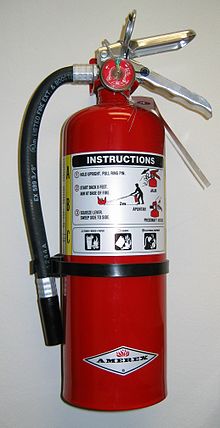
Last week, the $3 awareness drill proved itself very useful. I was in a building where a small electronic device had started heating up and smoking, threatening to catch fire. Of the 4 people to see the tiny conflagration, I was the only person who knew where the nearest fire extinguisher was. I had done the $3 drill several times over the preceding month in that building, and it turns out that behind fire extinguishers are a place no one ever checks for hiding dollar bills. :)

After the mess was cleaned up, I showed the other guys where the fire extinguisher was. It was in a little alcove in one of the main hallways. One guy later told me that he had walked by that thing 4 times a day for 7 years and never once noticed that it was there.


Today's awareness drill is simple. Where is the nearest fire extinguisher to you right now? Can you give specific instructions to a person on how to find it?

Follow on for extra credit: Where is the nearest fire alarm switch? (I did not know this one until after the fire, BTW).

Sunday, September 2, 2012

Screwing Over Future-You

I haven't very much willpower.

Luckily, I've learned to fake it by combing two other character traits:
  1. I have a fairly decent sized ego, and
  2. I am really really good at screwing over future-me.

Back in early 1994, a skinny 18 year old Louie was weighing the decision to enlist in the United States Marine Corps. Perhaps other 18 year olds are more profound or deliberate in their decision making; I made the decision in about 30 seconds. I wish I could say that I had a compelling reason to sign that contract - "Service to my great nation" would sound great, or maybe "family tradition" (3 of my 4 grandparents served in WWII. My grandmother was a Marine, and yes, she kicks tremendous amounts of ass). Even "chicks just melt when they see dress blues" would have been understandable.

But none of those entered my head. I signed my name simply because I wanted to test myself. I wanted a no-bullshit measure of where I stood on the badass-o-meter, a test where no one would bend a single inch to help me pass, and where no one would have the slightest reservation in letting me know if I fail. The Marine Corps is good that way. They have a vested interest in keeping the lazy, the weak, and the incompetent from crossing that finish line.

Like most young men making that transition to adulthood, I was leaving a childhood littered with half-finished endeavors, all started with the sincerest intents - sometimes even short lived obsession -  but ultimately left incomplete.

I couldn't let that happen again.

Before I could reconsider, I went straight to the recruiting station and signed my life away. The second I got back home, I told each and every person I knew that I was going to Paris Island. I shouted it from the mountaintops to every friend I had, every person I had an ounce of respect for, every acquaintance. I even told the people I couldn't stand, the ones who would be smiling if I failed.

Especially the ones who would be smiling if I failed.

You see, my fear of seeing those people in 3 months and having to announce my failure was way bigger than my fear of the Marine Corps. So every time during those next 12 weeks that I was face down in mud, trembling like jell-O, trying to squeeze out one more pushup with no end in sight, I thought of what it would mean to quit.  To walk that gamut of shame. To tell the people who didn't believe in me that they were right. And then I reached down and kept going. I reached my physical and emotional breaking point many times, but the commitments I had made kept me moving forward.

I can't tell you how many times I cursed out that younger civilian version of myself that had so glibly signed that paperwork, but you know what? He made the right choice. He signed me up for commitments and burned every bridge that would allow me to back out of them, and it worked. I graduated Paris Island on August 12, 1994. That date has opened a lot of doors for me since.

Today we're going to talk about a method of training awareness that ties in with that concept. It isn't a drill per se, but it is a useful tool in keeping you moving forward in your awareness training.You can combine this with future drills.

What you will need:
  •  A gmail account
  • A cell phone that is on you most days
We're going to use a tool called Google Calendar. It's a free tool that allows you to schedule recurring tasks. It is phenomenally useful because you can tie it to any phone and send yourself SMS reminders.  We're going to use this capability to send ourselves awareness pop-quizzes.

Below is an example template you can use with Google Calendar. The important parts for getting these reminders to your phone are in red. As you can see, I have a 12:30 reminder on Tuesdays and Fridays. Since I'm usually eating lunch at 12:30, this awareness drill works well in restaurants - I simply have to describe the people sitting closest to me whenever the alarm goes off. If I was actually aware of my surroundings instead of daydreaming about my McSlopBucket biggie-sized value meal, I pass the test.


I set this alarm for only 2 days of the week because I've found that for me, doing it every day allows me to get used to it and game the system. I start thinking "OK, I better start looking around and seeing what everyone is wearing, because my phone will be going off in about 10 minutes..." Setting it for only 2 days a week allows me to forget about it until it goes off. It's more difficult, and I believe that is key in making the observant behavior come more naturally. Your mind may work differently; adjust accordingly.

When the alarm does go off, it has its own distinctive ringtone (this is set on the cell phone, not on Google Calendar). I don't even have to look down at my phone; I know from that sound that it's time for an awareness test. One that I've probably forgotten all about. One that I was signed up for by a younger version of myself.

Thanks, younger me. Way to keep me on my toes.

Enjoy!

Thursday, August 23, 2012

Awareness Drill: The $3 drill

This drill will take cost you exactly three dollars. The good news is, if you do a good job, you get all three of those dollars back.

The purpose of this drill is twofold: to increase your awareness of your immediate surroundings, and also to teach you to move in a way that doesn't draw attention to yourself.

This drill is best done in an area that you are often at, but you can try it at locations that are new to you also. It can be indoors or outdoors; the only thing you need to worry about is that IT MUST BE A PLACE THAT IS OFTEN USED BY MANY PEOPLE. Work is a perfect place. So is the street outside work. And the grocery store. And the gas station. Go wild with it.

Anyone who enjoys the hobby of geocaching will be good at this drill. :)

The drill is simple. Take three $1 bills (sorry for being America-centric... of course use a low denomination of paper money if you are in another country). Hide each bill anywhere in a public place where you don't believe they will be found for 3 days. Come back 3 days later and see if the money is still there. Obviously, find 3 different hiding places... don't just stuff all 3 in the same hole. ;)


By looking at the objects around you in a new light - not what they are intended for, but what the ARE, you take in more details about what is around you.

This drill was inspired by a night many years ago in Tombstone, Arizona, where I patiently waited for the better part of an hour for pedestrians to give me a chance to explore underneath the boardwalk bench I was sitting on and find the hidden item that I was sure had to be there.

Return in 3 days and see if you can collect each dollar. This is a nice drill because it provides a nice PASS/FAIL metric for whether you did it correctly or not. :)

Enjoy, and happy training!

Friday, August 17, 2012

Awareness Drill - Maps #1

This drill will take about 20 minutes. It doesn't cost anything, and will require only a pen and paper.

From a place that you spend a lot of time in, spend 10 minutes draw a map of your immediate surroundings. If you are at work (where most of us spend much of our days), try to map your floor. If you are outside, try to draw a map a hundred yards square, or a small neighborhood block.


When drawing your map, pay specific attention to safety. If you are indoors, where are the nearest exits? If you are in a restaurant, would it be through the kitchen? Do the restrooms have windows? Are you sitting next to a large plate glass window?


A few scenarios to help you:

1) (for indoors) - A shooter comes in off the street. Where are your exits? If the nearest exit is a window, what is nearby to break it? If you are on a floor higher than ground, is this even a possible route of egress? What would you need to do to leave the building safely in this manner? How long would it take to prepare? How noisy would it be?

2) (For indoors) - A person who is already inside the building suddenly becomes a shooter. Maybe it's a restaurant patron sitting near you, maybe a frustrated coworker. What routes do you have to get away? If you are in a larger building with corridors, what routes give you more options? Visibility?

3) (For indoors) - Where are good places to hide? Are there rooms or areas that are lockable from the inside? The building I am in now has many rooms that are lockable - but each one has a large decorative glass panel next to it that is easily broken and that anyone could walk through with little difficulty. Does that necessarily make it a bad place to hide?

4) (For outdoors) - where is the nearest very public place? If you had to attract a lot of attention, where would you go?

5) For anywhere - What is around you that can stop bullets? Or a determined follower? Where could you quickly lose someone who was chasing you?

Take about 10 minutes to draw your map. When you are finished, take another 10 minutes to walk around the area and see what you've missed. Forgot about a chain-link fence? Were there stairs that you didn't account for? A secure room that you missed? It's enlightening what you can miss about a place you spend 1/3 of your life in each and every day.

Monday, August 13, 2012

Awareness Drill - Sense of Smell

This drill will cost you nothing, or possibly one onion if your refrigerator is not well stocked. It takes 5 minutes to play, but if you find yourself having a good time, it can go much, much longer. It also requires a partner, and is suitable for work with kids.


This drill comes from an interesting source - the 1919 book "Scouting Games", by BSA founder Sir Robert Baden-Powell. Take a look through the book; boys were trained to be straight-up miniature ninjas 100 years ago. (There was even a "Master At Arms" merit badge, retired in 1911, which was earned through fencing, quarterstaves, archery, boxing, and wrestling. Few den mothers would allow this today, I'm afraid...)

I'll tell you right now: all things being equal, women are better at this game than men. People who spend tremendous time outdoors are better at it than their office-dwelling counterparts. I spent 4 weeks living like a caveman in a desert; 2 weeks after getting back to civilization, I was able to find a grove of Paw-Paw trees from 20 yards away based on smell alone - I could smell the fruit rotting on the ground. Your sense of smell can be sharpened, and will likewise atrophy without use. Start sniffing things now.

The most straight-forward version of this drill is to have your partner take an onion or similar pungent object, and rub it on various objects in your yard (out of your view, of course). Make it easy on yourself and do it at nose-height for the first few attempts. Then see if you can discover where that onion has been rubbed. The BSA manual recommends that the finder be blindfolded; I think that is because rubbing an onion on things leaves a wet mark and sometimes other visual clues like flakes of peel - but I don't think you need to start off blindfolded. For most people, the drill is challenging enough with your eyes open.

Permutations on this involve closing your eyes and having your partner bring various objects up to your nose. See if you can identify what they are made from. Aluminum has a sharp smell to it. Wax, not so much. Raid your kitchen on this one. Tomato plants have a similar smell to cut tomatoes, especially when the stem is crushed. Not so much in the leaves. What does your shirt smell like? Your wife's shirt?

In his excellent blog, Rory Miller talks about the sense of smell often. Nobel Laureate and physics genius Richard Feynman used to impress (disturb?) people at parties by having a guest pick a book from his shelf at random and open to a page while Feyman was out of the room. He would then smell the guest's hand and find what book they had touched, often finding the exact correct page.

Start working on this under-utilized sense now. Experiment. Discover. Play. Your environment is flooded with smells - see how much information is out there, free for the taking, that you never noticed before.